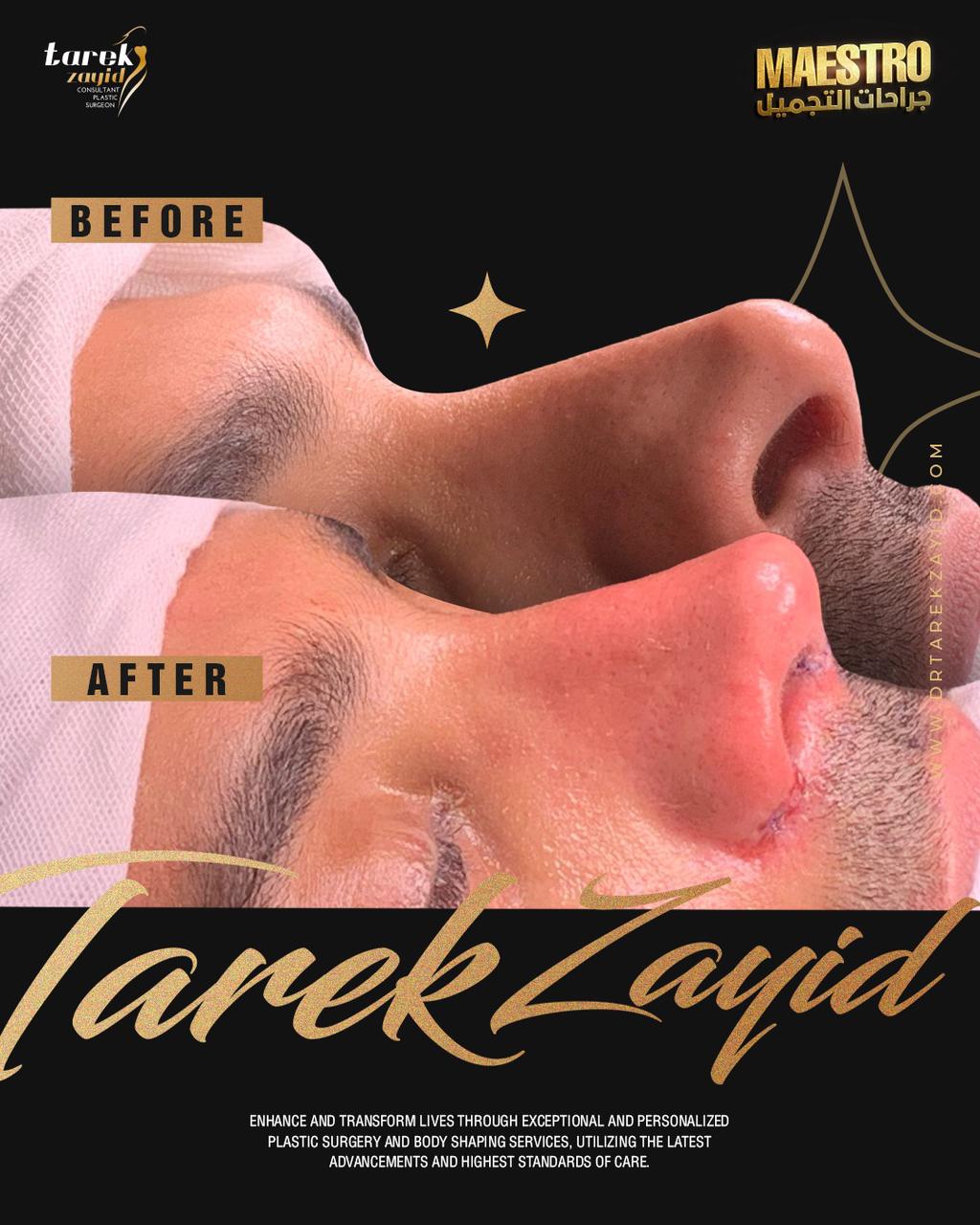
Types of Rhinoplasty Procedures
Rhinoplasty techniques vary widely to meet patient needs, ranging from reduction rhinoplasty and thread nose lifts to septoplasty and dermal filler rhinoplasty. These procedures differ in their objectives and approaches; some techniques aim to enhance cosmetic appearance, while others focus on restoring nasal function.
Share this page:


 Whatsup
Despite the widespread popularity of rhinoplasty, not all nose surgeries are identical. Procedures vary in technique, surgical approach, and the specific goals of each patient. Dr. Tarek Zayid, Consultant Plastic Surgeon, specializes in performing various types of rhinoplasty using advanced surgical methods, ensuring patients achieve optimal aesthetic results with minimal to no visible scarring.
Rhinoplasty
Rhinoplasty is a surgical procedure designed to alter the shape of the nose by modifying the underlying bone and cartilage. The types of rhinoplasty vary according to procedural goals: many patients undergo cosmetic rhinoplasty, such as reduction rhinoplasty, while others require functional correction to treat breathing difficulties, such as a deviated septum.
Who Are the Candidates for Rhinoplasty?
Ideal candidates for rhinoplasty should meet specific criteria, including:
1. Adulthood and good general health: Candidates must have completed facial growth (past adolescence) to ensure that nasal bones and cartilage are fully developed, as age plays a critical role in long-term surgical outcomes.
2. Realistic expectations: A clear understanding of the procedure’s scope and limitations. For instance, in older patients or cases involving an exceptionally large nose, the degree of reduction may be limited by skin elasticity.
3. Absence of healing impairments: The patient must be free from underlying medical conditions that could hinder wound healing.
Types of Rhinoplasty Procedures
Rhinoplasty is available in different forms to meet patients’ needs according to their individual goals. Some of these types include:
Reduction Rhinoplasty
Reduction rhinoplasty is a cosmetic procedure aimed at decreasing the overall dimensions of the nose to create a smaller, more harmonious facial profile. It can refine the nasal tip, nasal bridge, nostril size, and the angle between the nose and upper lip. Dr. Tarek Zayid often performs this procedure using the closed rhinoplasty technique, where all incisions are placed inside the nostrils, leaving no external scars.
Advantages and Disadvantages of Reduction Rhinoplasty:
• Advantages: Significantly reduces nasal size by modifying the bone and cartilage framework. It narrows the width of the nose, reduces nostril width, and refines a bulbous or drooping nasal tip by trimming excess lower cartilage.
• Disadvantages: Temporary postoperative swelling and bruising are normal and typically resolve within 1 to 2 weeks. Rare risks include prolonged numbness at the nasal tip, infection, or burst superficial capillaries resulting in minor red spots.
Thread Rhinoplasty (Thread Nose Lift)
Thread rhinoplasty is a non-surgical option that utilizes bio-absorbable threads identical to standard surgical sutures. This procedure lifts and straightens the nose and elevates a drooping tip with minimal downtime and no surgical incisions. Unlike surgical rhinoplasty, general anesthesia is not required. Once the nose has been numbed with a local anesthetic, the threads are inserted through the nasal tip area and guided toward the nasal bridge.
Advantages and Disadvantages of Thread Rhinoplasty:
• Advantages: A quick, non-surgical procedure providing immediate visible contouring without surgical cuts. It elevates and repositions tissues to make the nasal bridge and tip look slimmer and more elevated.
• Disadvantages: It cannot alter the underlying bone or cartilage structure, offering limited correction compared to surgical rhinoplasty. Results are temporary, lasting up to a few years, and threads can occasionally shift from their intended placement.
Septoplasty (Deviated Septum Surgery)
The nasal septum is the internal partition of bone and cartilage separating the left and right nostrils. A deviated septum occurs when this wall is displaced off-center, causing nasal obstruction and breathing difficulties. Septoplasty straightens the internal framework by repositioning the deviated septum to the midline and removing obstructive bone spurs or excess cartilage.
Advantages and Disadvantages of Septoplasty:
• Advantages: Directly resolves airway obstruction and breathing issues, significantly improving daily quality of life. It can also be combined with cosmetic rhinoplasty (septorhinoplasty) in a single session to enhance both the function and appearance of the nose.
• Disadvantages: Potential risks include septal perforation, postoperative bleeding, and infection.
Dermal Filler Rhinoplasty (Liquid Rhinoplasty)
Filler rhinoplasty is a non-surgical procedure involving the injection of dermal fillers, such as hyaluronic acid, beneath the skin to temporarily reshape nasal contours. It is an ideal option for smoothing out dorsal humps or softening sharp angles.
Advantages and Disadvantages of Filler Rhinoplasty:
• Advantages: A non-surgical, low-downtime technique that smooths irregularities and strategically adds volume where needed.
• Disadvantages: Results are temporary. The filler may occasionally migrate toward adjacent areas or beneath the lower eyelids. Additionally, fillers cannot reduce the size of the nose, as they add volume rather than remove tissue.
Cost of Rhinoplasty
The cost of rhinoplasty varies depending on the surgeon's qualifications and expertise, the surgical technique employed, and the operating hospital or clinic facility. A personalized consultation with Dr. Tarek Zayid is necessary to determine the exact procedure and pricing tailored to each individual case.